Taguchi opens up: connecting the modern martech stack
Marketers are not short of technology. This year, the Marketing Technology Landscape counted 9,932 solutions, an increase of 24% in just two years. The real challenge is getting the right systems to work together without creating more silos, more manual handling or another expensive replacement program.
At the same time, privacy changes are increasing the value of data collected directly from customers. Nielsen’s 2022 research found that 69% of marketers consider first-party data essential to their strategies, yet only 26% are fully confident in their audience data. Organisations understand the opportunity. What many lack is a dependable way to connect data, decisions and delivery.
This is the environment in which Taguchi is launching its new integration framework.
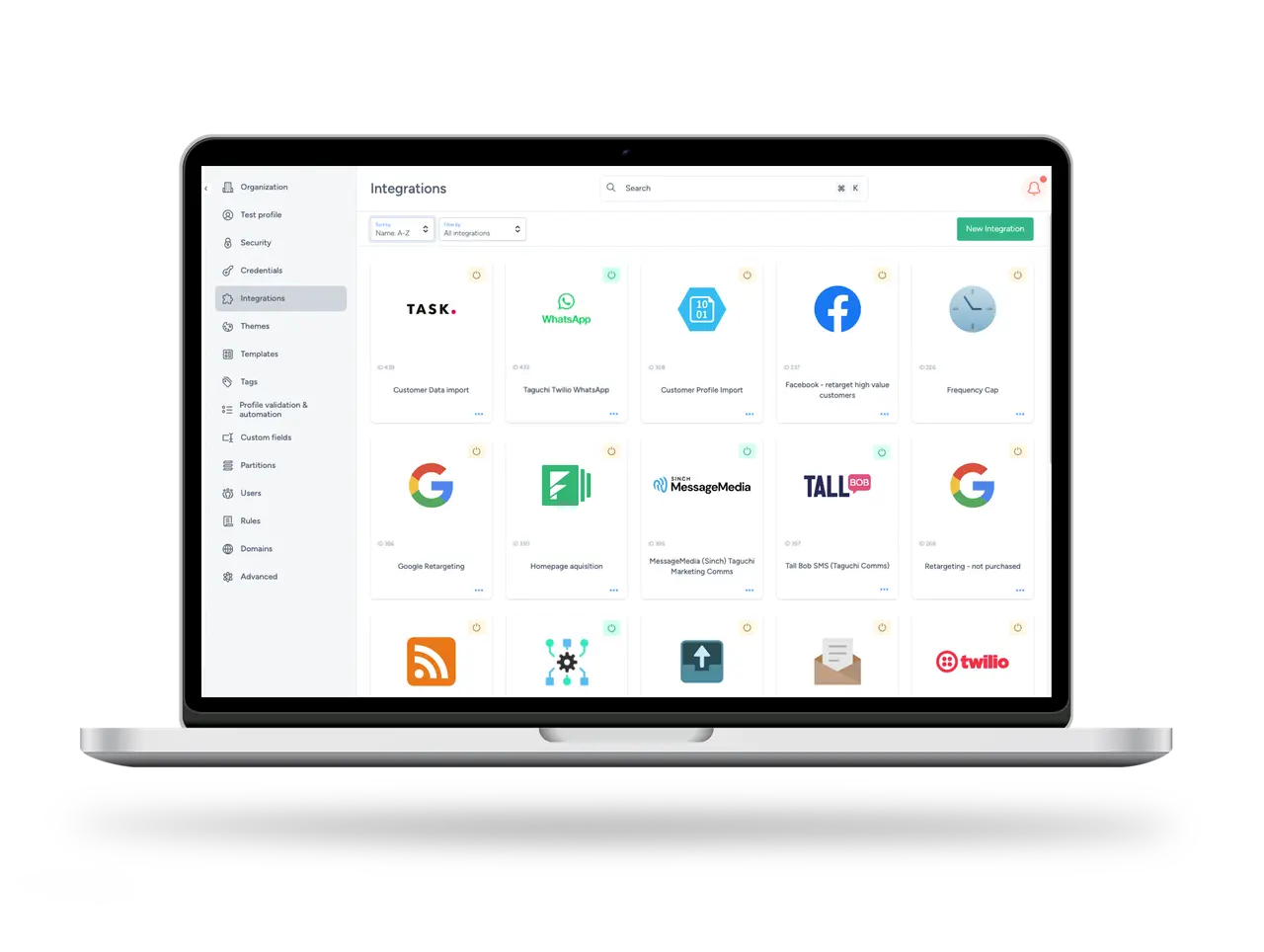
Integration without the “rip and replace”
No single platform needs to do everything. A booking engine may remain the best place to manage reservations, a point-of-sale system may own transactions and a specialist provider may deliver messaging. Taguchi’s role is to turn the data and signals across that stack into timely, relevant customer communication.
Our new integration platform makes that approach much easier to put into practice. It creates a common place to configure, activate and manage connections between Taguchi and the other technology an organisation already relies on.
That matters strategically. Instead of replacing a proven operational system simply because its marketing capability is limited, businesses can connect it to a specialist customer engagement platform. Core technology is preserved while marketing gains room to evolve.
From bespoke projects to repeatable capability
Too often, integrations become one-off technical projects: each connection specified, built and maintained in isolation. Taguchi’s integration templates change that model by defining the information, credentials, audience rules and schedules required for different types of connection.
For users, the benefit is consistency. A scheduled data process can ask for a start time and repeat interval; a customer extract can define its audience and delivery format; a channel connection can request only the credentials and settings relevant to that provider. Required information is built into the setup experience, reducing ambiguity and making integrations easier to reproduce and support.
Templates also create a foundation for growth. Use cases can extend from recurring customer extracts to frequency caps that coordinate contact pressure across campaigns. New connections can share one framework for scheduled processes, data movement and real-time channels.
Turning channels into conversations
Customer journeys are becoming more fragmented. Email remains important, but SMS, social advertising and messaging platforms are increasingly part of the same relationship. Simply adding more outbound channels is not enough; brands need the interactions flowing back from those channels too.
Taguchi’s channel integrations make that return path tangible. Inbound webhook URLs are surfaced directly within the integration setup, giving connected services a defined destination for replies and events. New credential types support LINE and Vidcorp alongside services such as MessageMedia and Twilio, while credentials are managed separately from day-to-day channel configuration.
The benefit is bigger than connector choice. When a reply, unsubscribe or other customer signal can return to the platform, communication stops being a sequence of disconnected broadcasts. It becomes a conversation. That creates a more complete interaction history, supports more responsive journeys and helps ensure that future messages reflect what the customer has already done.
Making first-party data portable
Real-world martech stacks do not all exchange data through real-time APIs. Large extracts, legacy platforms and batch processes often depend on files. File transfer is widely supported, predictable and capable of moving substantial datasets between very different systems.
Taguchi’s SFTP capability makes this practical route more accessible. Organisations can use a Taguchi-managed SFTP location and view their account username in the credentials area, while scheduled templates support controlled extracts for use elsewhere in the stack.
This opens a useful bridge between old and new. A legacy system capable of producing a regular file can participate in a modern first-party data strategy without major redevelopment. Equally, Taguchi data can be made available to analytics, operational or reporting workflows in established formats. Integration becomes a matter of choosing the right method for the job, rather than forcing every system into the same technical pattern.
Faster answers across a connected stack
Connections are only valuable if teams can understand what happens after data and messages begin to move. New search improvements help close that operational loop.
Within a subscriber profile, interaction history can be filtered by event type and searched for relevant activity or message details. Global search now provides a more direct route to full results, while respecting whether a user has permission to view subscriber data.
These changes reduce the distance between a customer question and an answer. Was a message sent? Did it bounce? Did the customer reply or unsubscribe? Faster investigation means faster support, more confident optimisation and less time piecing together evidence across systems.
An open foundation for what comes next
Taguchi’s new integrations platform is not simply a longer list of supported services. It represents an architectural shift towards a more open, adaptable platform—one designed to fit into an organisation’s martech stack rather than demand that the stack be rebuilt around it.
Integration templates make connections more repeatable. Webhooks help channels operate in both directions. Credential support and role-based access add control. SFTP keeps valuable legacy and batch workflows in the picture. Better search makes the resulting customer history easier to use.
Together, these capabilities help organisations turn a collection of technologies into a connected customer engagement ecosystem. And in a market defined by more channels, more first-party data and almost 10,000 martech products, connection is becoming just as important as capability.
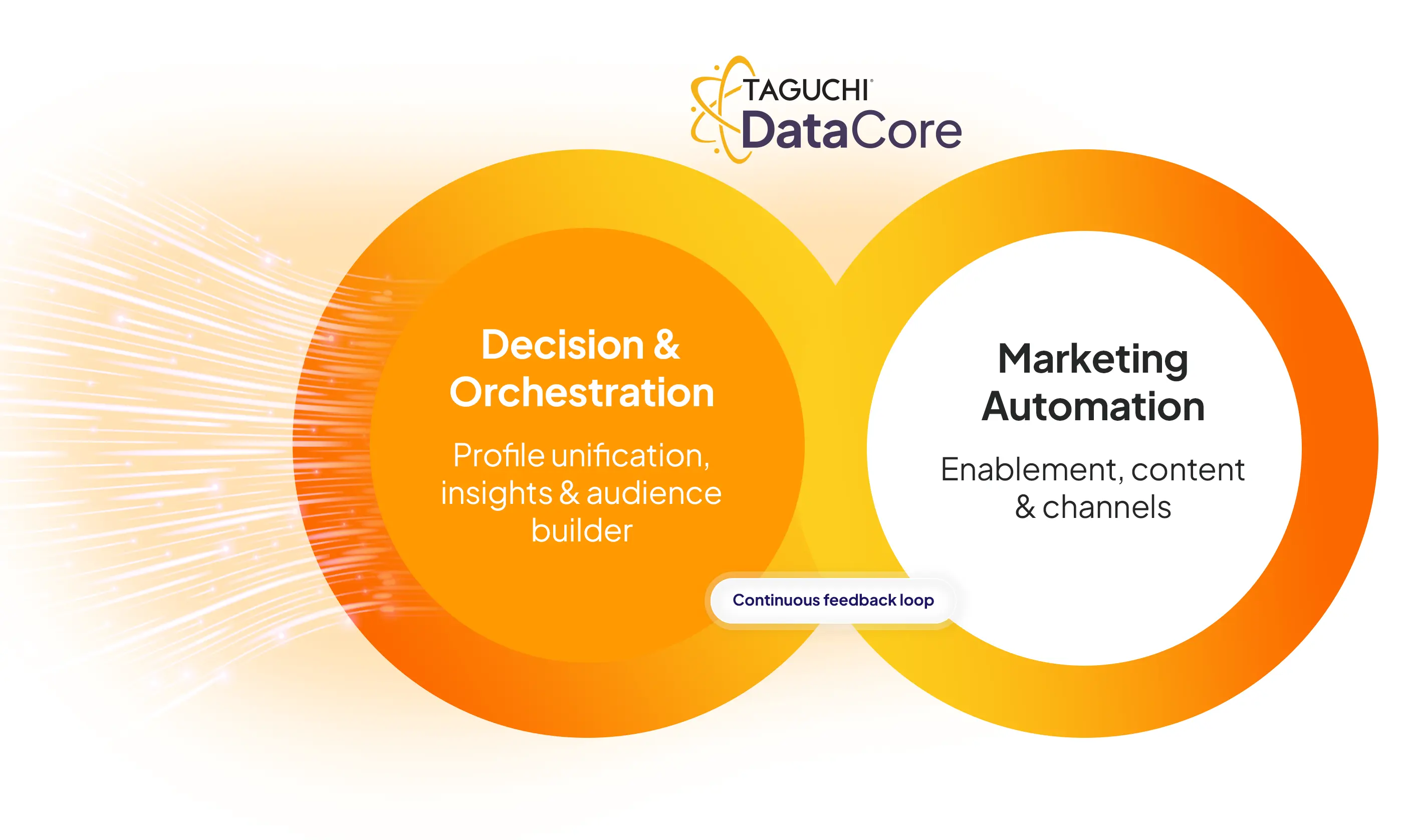
For practical guidance on integrations, credentials, channel setup and SFTP, visit the Taguchi Support integrations knowledge base. To learn more about Taguchi’s customer engagement platform and services, visit the Taguchi Data Core webpage.