Model your data your way: a more adaptable Taguchi
Customer data rarely arrives in a neat, universal shape. A retailer may organise customers around stores and product categories. A membership organisation may care about tiers, renewal dates and participation. A charity may need to connect supporter records with fundraising activity. The standard fields are only the beginning.
At the same time, the average technology environment is becoming more complex. Salesforce’s 2023 Connectivity Benchmark research reports that organisations use an average of 1,061 applications, yet only 29% are integrated. Eighty per cent of respondents say integration challenges are slowing their digital transformation efforts.
Taguchi’s latest improvements answer a practical question: how do you preserve the meaning of data that is unique to your organisation while moving it reliably between an expanding number of systems? Organisations can now manage their model directly, turn information into useful customer signals and connect those signals to more of their technology.
Give customer data a business vocabulary
A fixed schema can describe common facts such as a name, email address or phone number. It cannot anticipate every membership status, product preference, service region, account relationship or operational rule that makes an organisation distinctive.
Custom fields provide that flexibility, and Taguchi now centralises their management in Settings. Authorised users can define, search and manage fields; group names and descriptions clarify their purpose, while optional validation rules protect the expected format of static values.
The model reaches well beyond subscriber profiles. Taguchi supports eight custom-field contexts: subscribers, purchases, products, purchase line items, visits, subscriber events, pages and partitions. A shared field selector then carries those definitions into the places teams use them, including subscriber management, targeting and activity setup.
Marketing and data teams can now share a business vocabulary, with the concepts that drive relevance visible and reusable across the platform.
One structure for every store, branch or brand
Partitions extend that thinking to distributed organisations. Each store, franchise, branch, region or brand can have its own external reference and custom data.
Partitions are searchable and editable from Settings, and teams can create them individually or manage them in bulk. Their fields can hold location names, addresses, contact information, opening hours or local URLs for use in targeting and personalised content.
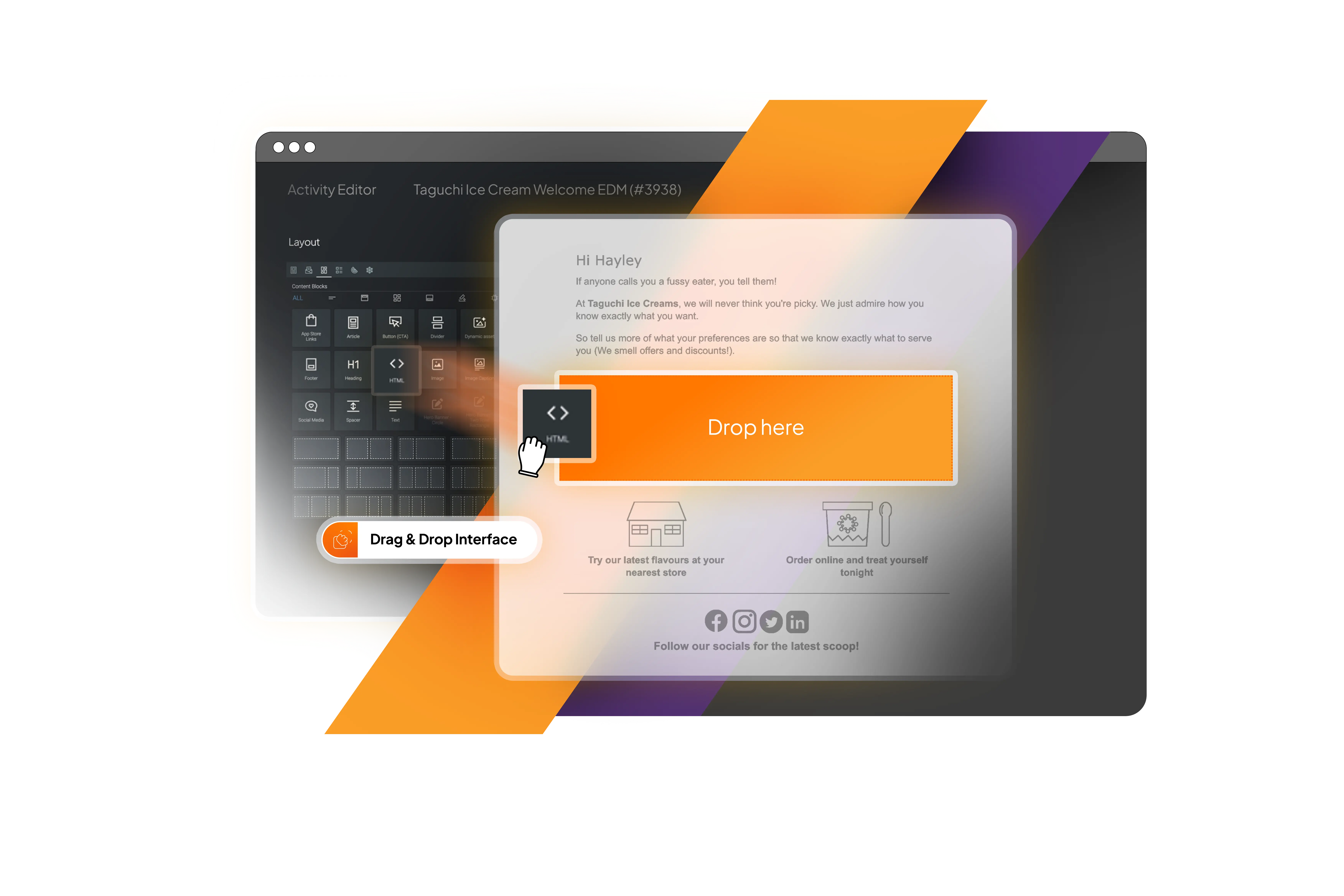
Head office can work from one customer engagement model and one approved campaign while each recipient sees the correct local context. Updated partition support in activity previews gives teams greater confidence in that personalisation before deployment.
Turn stored facts into living signals
Valuable customer attributes often need to be inferred from behaviour: whether somebody is active or at risk, which products they prefer or whether they qualify for a journey.
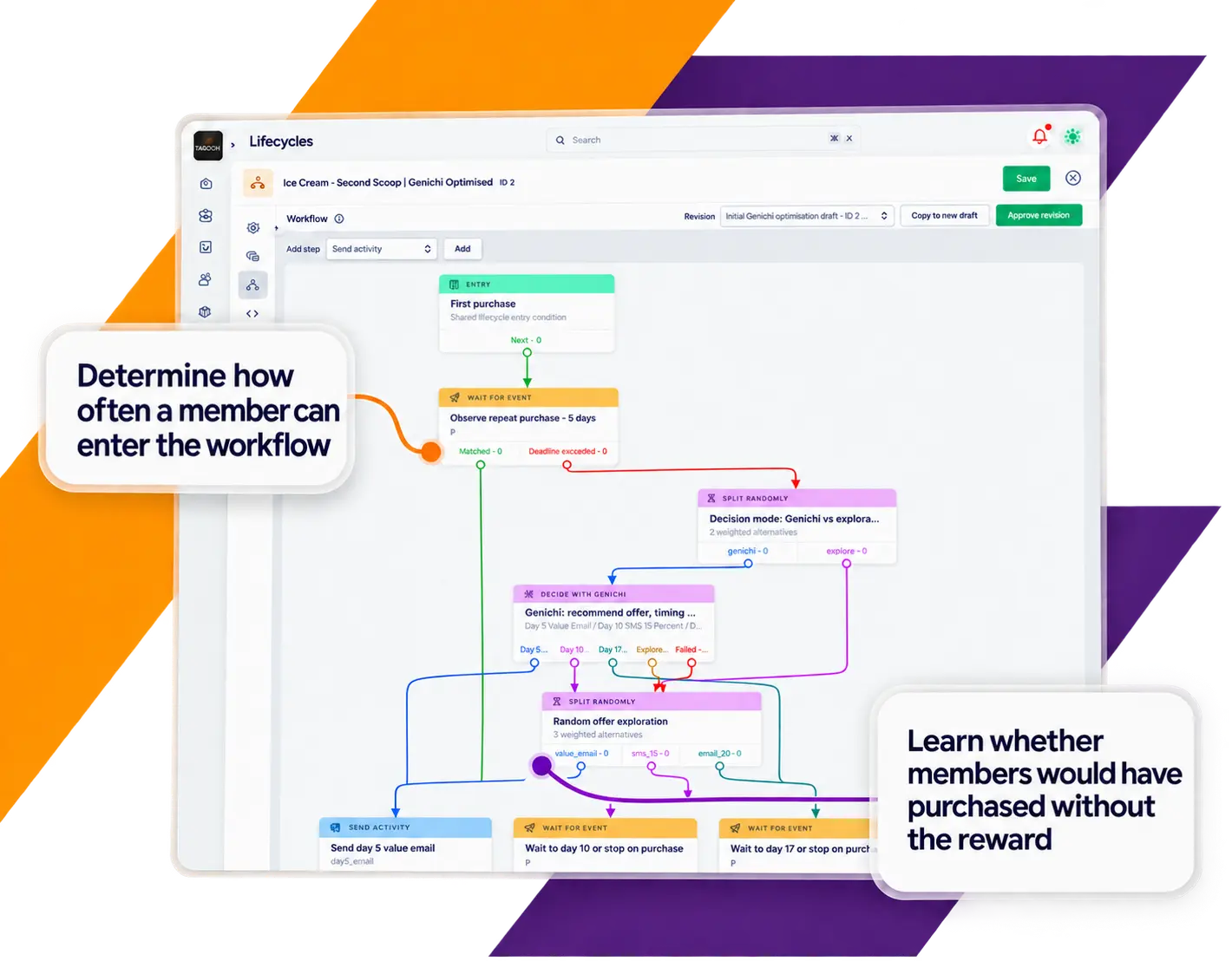
Calculated custom fields bring that logic into Taguchi. Teams can use a target expression to identify the relevant subscribers, apply a calculation rule and schedule the result to update once, hourly, daily, weekly or monthly. Controls can clear a value when a subscriber no longer matches, or replace an earlier value when their circumstances change.
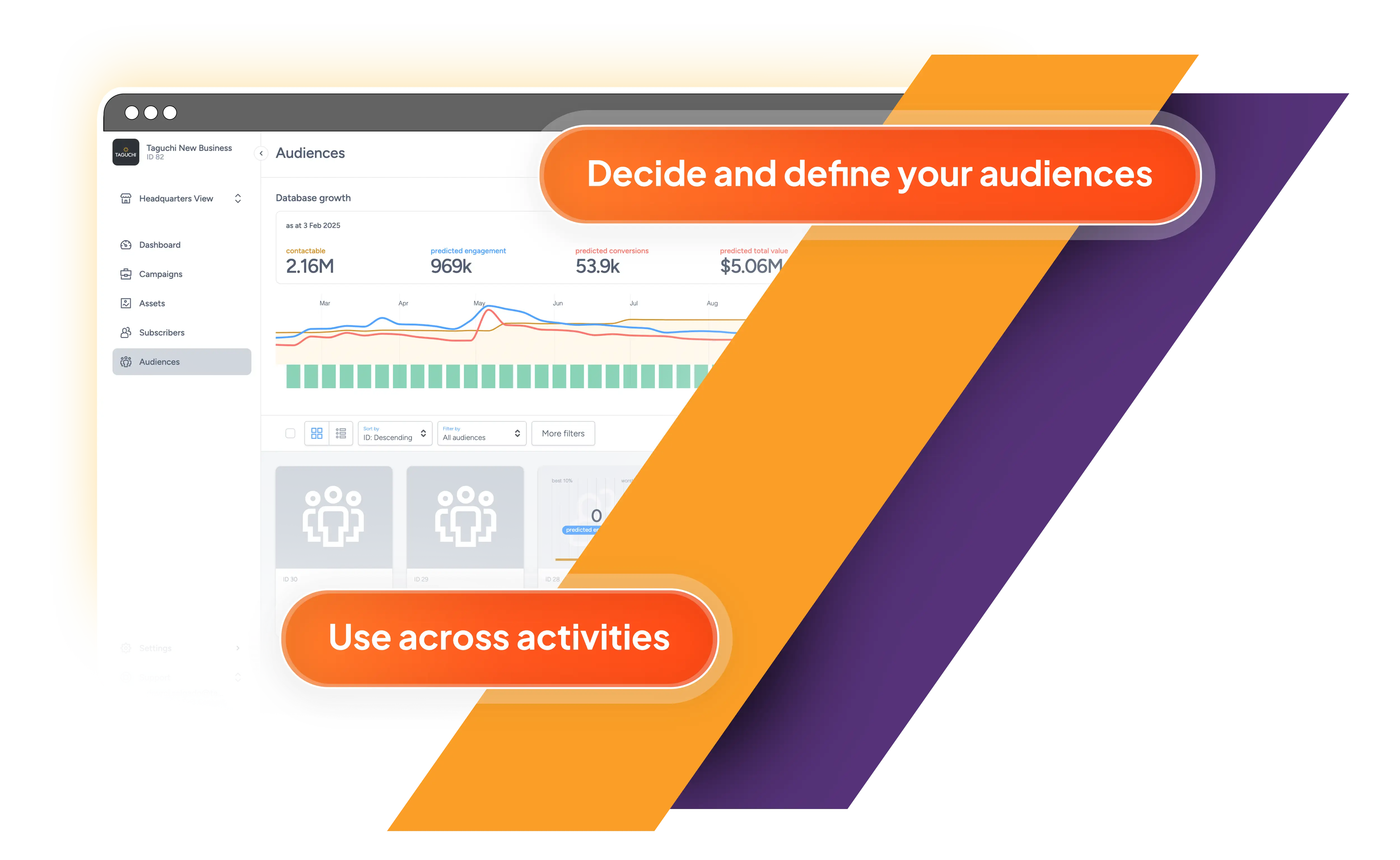
This turns segmentation from a repeated task into a maintained data asset, reusable across campaigns, workflows, personalisation and reporting. As behaviour changes, the field can change with it.
The interface also makes quality visible. Statistics show populated, invalid and unique value counts, plus common valid and invalid examples. Teams can check a field before relying on it for an important audience decision.
Integrations become part of the platform proper
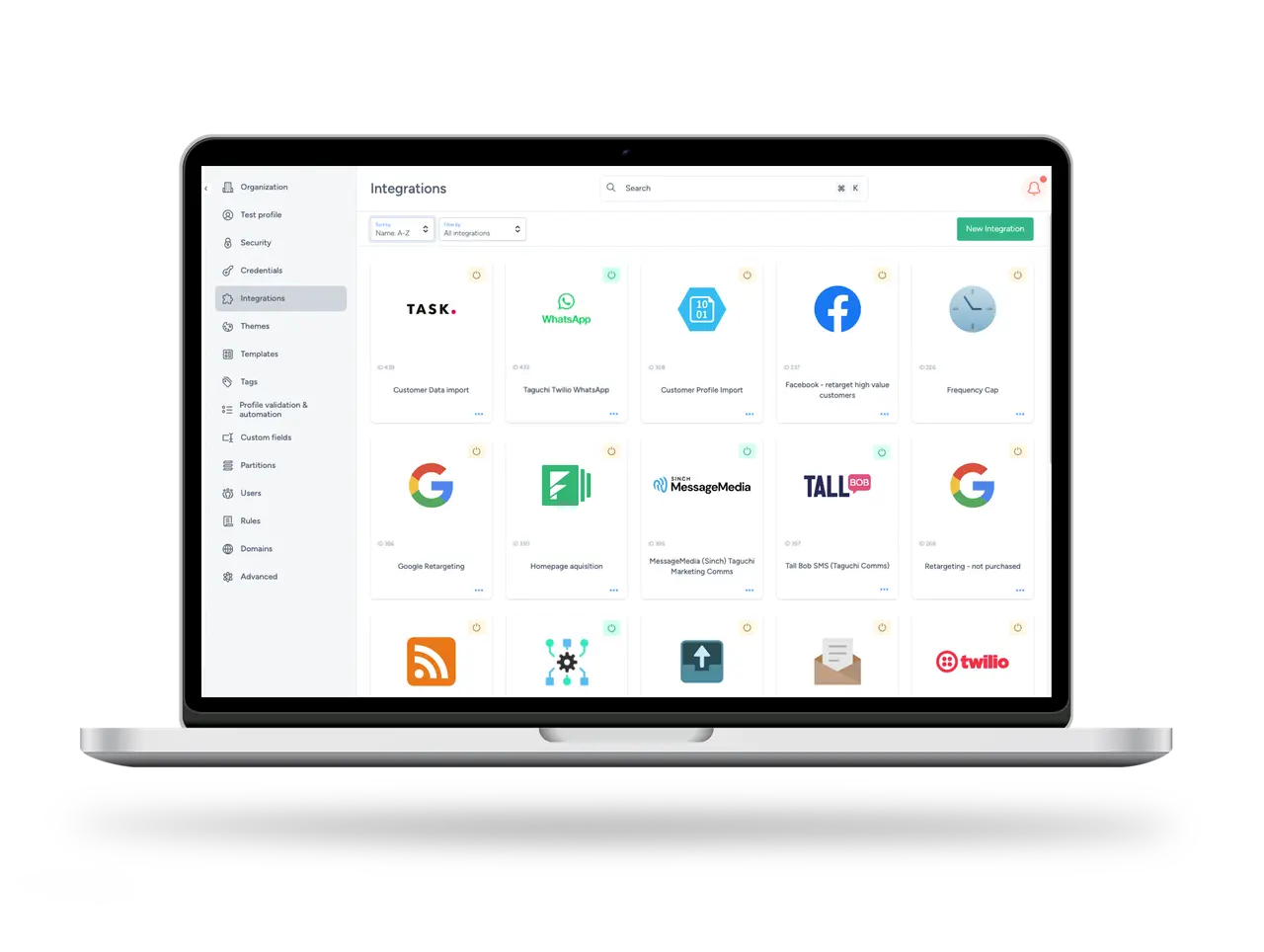
In July, Integrations moves out of beta. For users with the appropriate integration-management access, it is now a standard part of Taguchi Settings rather than an organisation-specific preview feature.
The framework now gives connections a consistent approach to credentials, schedules, data mapping, audience selection and configuration, even when they solve very different business problems.
Six new ways to connect and protect data
From June to October, Taguchi adds six significant connection and secure-exchange capabilities across enterprise data, forms, messaging and exports.
OData 4.0 support gives organisations a scheduled path from compatible enterprise services into Taguchi. External fields can be mapped to subscriber profiles, aggregated subscriber data, list membership and conversions, helping established operational systems participate in customer engagement without a wholesale redesign.
Azure Blob imports provide a cloud-file route for JSON and CSV data. Subscriber profiles, lists, custom fields and partition data can flow from an existing Azure storage process into the model now managed in Taguchi. Formstack integration brings submitted form data into subscriber records, shortening the distance between an expression of interest and the next relevant action.
Tall Bob expands the choice available for SMS delivery, including sender configuration, URL shortening and unsubscribe handling. A Blackbaud interactions export helps return engagement data to a constituent-management environment, so customer or supporter activity does not remain isolated inside the messaging platform.
For sensitive file movement, GPG encryption adds another layer to SFTP extracts. Taguchi can encrypt an export using the recipient’s public key before delivery, helping organisations fit secure customer-data exchange into established governance processes.
The value is the range of patterns covered: APIs, cloud storage, forms, outbound interaction data, mobile messaging and encrypted batch exchange. Each system can use the route that fits it best.
Flexible where it matters, controlled where it counts
An adaptable model should not become an unmanaged collection of mystery fields, nor should integration flexibility create a maze of one-off connections. Taguchi combines central definitions, validation, statistics, permissions and repeatable templates. Marketing gains freedom to use the signals that matter, data teams retain oversight of structure and quality, and technology teams gain practical ways to connect the wider stack.
The result is a platform that adapts to the organisation—not the other way around—while retaining the control needed to operate at scale.
For guidance on setup and data modelling, explore Managing Custom Fields, Partitions and the Integrations knowledge base on Taguchi Support. To learn more about the wider customer engagement platform, visit the Taguchi website.