Delegate the work, own the outcome: Taguchi’s perspective on AI

AI is changing the scale of work one person can take on. A marketer can hand an agent a substantial brief and return later to a considered result. That is a much bigger opportunity than using AI to polish a subject line or draft a paragraph.
Today’s frontier models can remain on task for hours and use specialist tools along the way. They can verify details against source data, then revise their work when the evidence points elsewhere. Much less procedural instruction is required from the user.
Recent OpenAI research gives a sense of this shift in scale. More than 70% of sampled individual Codex users had assigned at least one task estimated to represent over an hour of human work. AI is moving beyond quick answers and into work that previously demanded a meaningful block of someone’s day.
At Taguchi, we believe users should set the goal and its boundaries. The agent can handle much of the route.
This gives marketers more leverage. Their time can move towards judgement, creativity and strategy while the agent takes on more of the underlying process.
A bigger brief
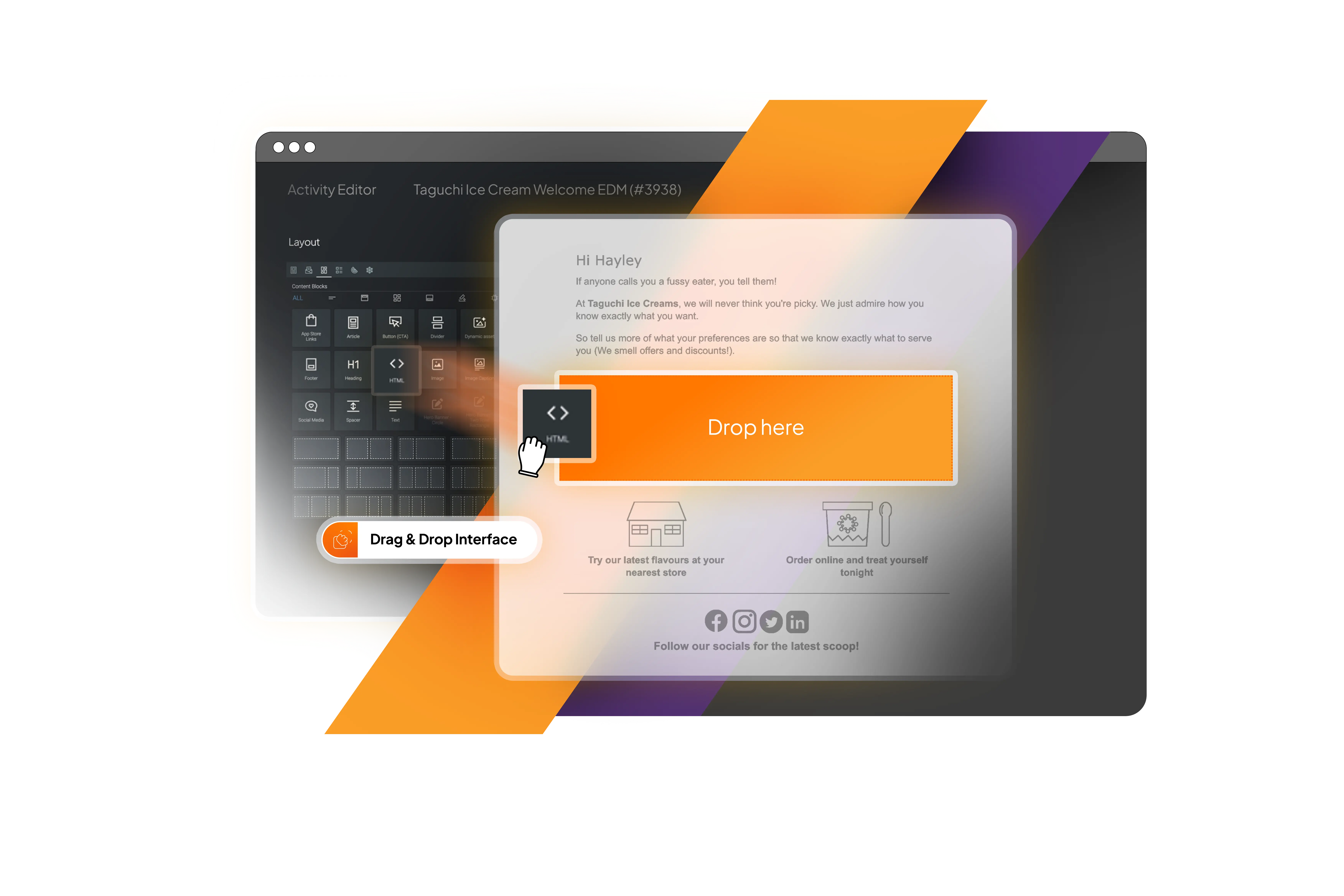
Generative AI first appeared in many marketing platforms as a content assistant. It could suggest subject lines, refine copy or generate a call to action. Capabilities such as AI assistance in the Taguchi Activity Editor make those everyday tasks faster.
Agents allow the brief to become much more ambitious. Consider a re-engagement project for lapsed customers. The marketer might ask:
“Improve re-engagement among lapsed customers while holding contact pressure steady. Use recent performance and audience data to recommend the journey, then prepare it for approval.”
In Taguchi, an AI agent can find the relevant campaign results and establish how many customers are reachable. It can study their recent interactions, decide which channel mix deserves testing and develop a campaign proposal. Before handing the work back, it can check the configuration and explain the evidence behind its recommendations. Don't take our word for it: connect your desktop AI application to your Taguchi organization via MCP and try the prompt above out for yourself.
The marketer still owns the commercial objective and makes the final judgement. Their expertise is applied earlier, where it has greater influence: framing the problem well and deciding what an acceptable result looks like.
Software interfaces change when they can act on a brief of this size. Editors and dashboards remain important, but their role begins to shift. They become places where people review evidence, steer the work and handle exceptions. Routine navigation occupies less of the day.
Context makes delegation useful
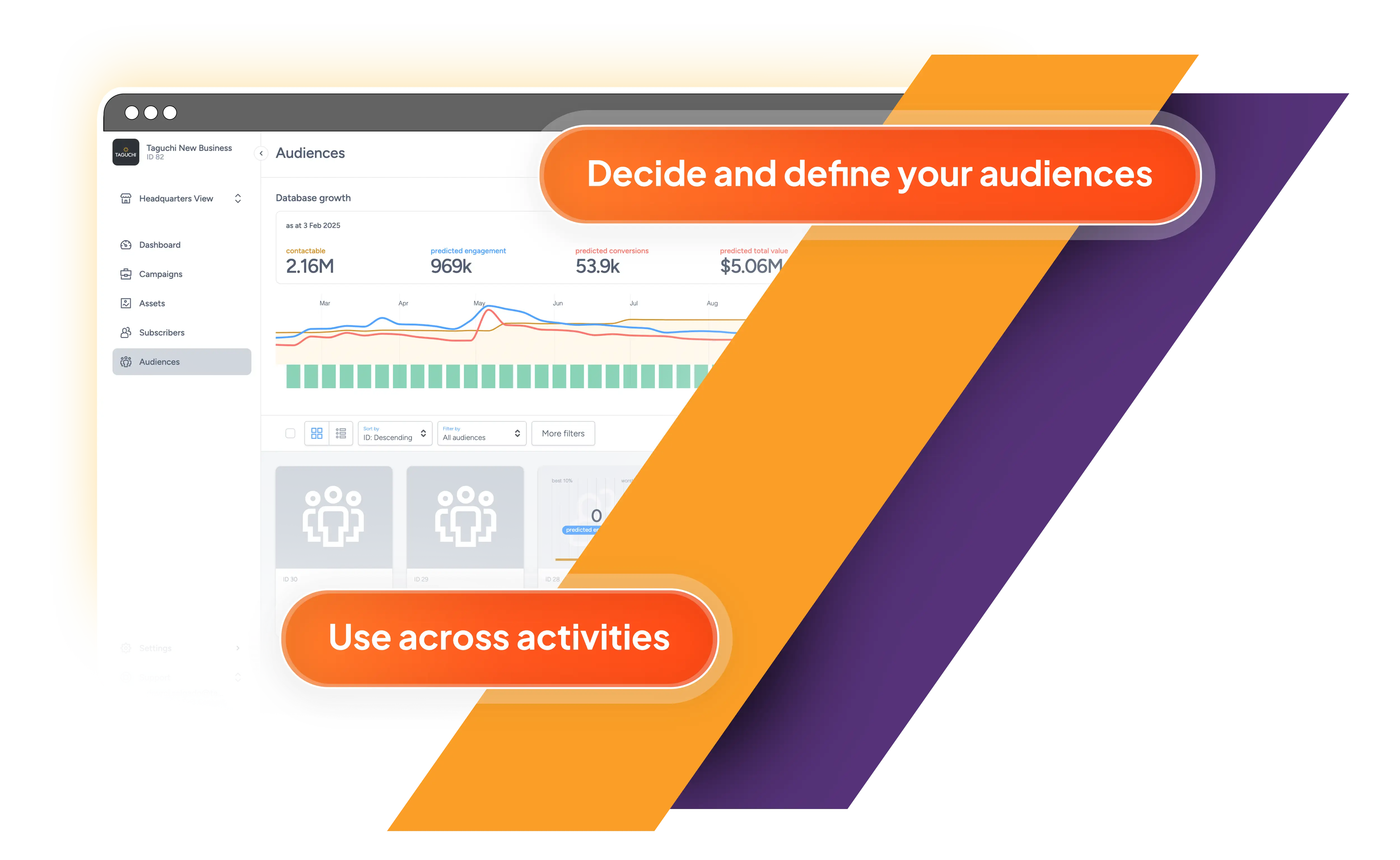
A short prompt can produce good work only when the agent has enough context. Campaign history provides a performance baseline. Audience data establishes likely reach. Brand guidance keeps the proposed experience recognisable, while product documentation grounds the agent’s advice in the way the platform actually works.
Guesswork has no place in this workflow. Audience estimates and benchmarks should come from actual data. Configuration advice should trace back to verified documentation.
Tools give the model a practical way to gather that evidence. It can retrieve a record or perform a calculation before reaching a conclusion. It can also run a platform check rather than assuming that a proposed change will work. When evidence is unavailable, the limitation should be visible to the user.
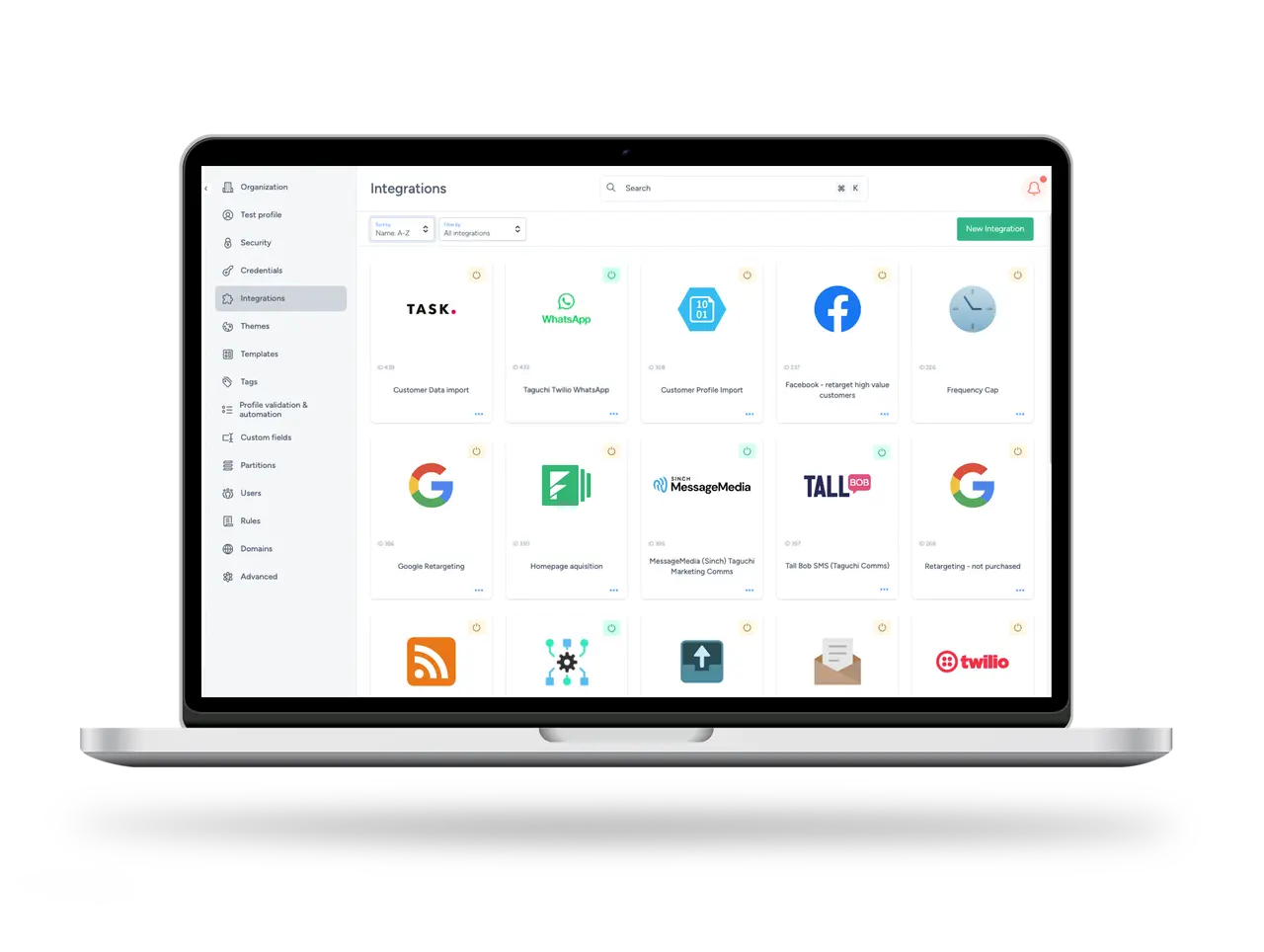
Model Context Protocol (MCP) provides the connection that makes this possible. MCP gives an approved AI agent a standard way to discover Taguchi’s capabilities and call the relevant tools. Users can describe their objective in familiar language while the platform supplies the records and documentation needed to pursue it properly.
MCP and Genichi: two routes into the work
Taguchi already offers two ways for organisations to work at this higher level.
Taguchi MCP gives an organisation’s approved agent the full power of the Taguchi platform. Genichi AI gives all Taguchi users access to their own native agent.
With Taguchi MCP, a business can connect a compatible AI environment it already uses. The agent works within the access granted to it. It can search relevant records, consult documentation, estimate an audience and prepare changes. Activities can be previewed and checked before the proposed work reaches an approval point.
This approach fits organisations that have established their own AI policies or invested in an approved internal agent. They can retain their preferred models and data controls while giving the agent a governed connection to Taguchi. There is no need to establish a separate AI operating model for every software platform.
Genichi AI chat places this capability directly beside the work in Taguchi. When a user opens an activity or report, Genichi already understands where they are. It can draw on the current page and recent work without requiring the user to repeat that background in every conversation.
Genichi uses Taguchi’s MCP capability layer behind the scenes. This allows it to consult organisation data and documentation as an assignment progresses. It can also call specialist tools and make its progress visible during longer jobs.
Both approaches are built around the same practical requirement. The agent needs enough verified context to be genuinely helpful, and the user needs a clear view of the resulting work.
Controls that match the assignment
A small copy suggestion needs a light touch. A campaign change that could affect thousands of customers deserves stronger controls. The way an agent is governed should reflect the consequences of the work it has been given.
Taguchi MCP connections are scoped to an organisation and operate within the user’s existing roles and partition access. Permissions can be reduced when necessary, and sessions can be revoked. Genichi adds controls over model usage and requires approval before consequential changes proceed.
As assignments grow, reviewing every intermediate action becomes impractical. Users need to examine the evidence and the proposed result at sensible checkpoints. Proofs and automated checks make that review more useful because they test the work before it reaches customers.
Oversight continues after deployment. Monitoring can reveal behaviour that pre-deployment review did not anticipate, while rollback provides a practical response when something goes wrong. These safeguards give people the confidence to hand over more substantial assignments.
The customer lifecycle is the next brief
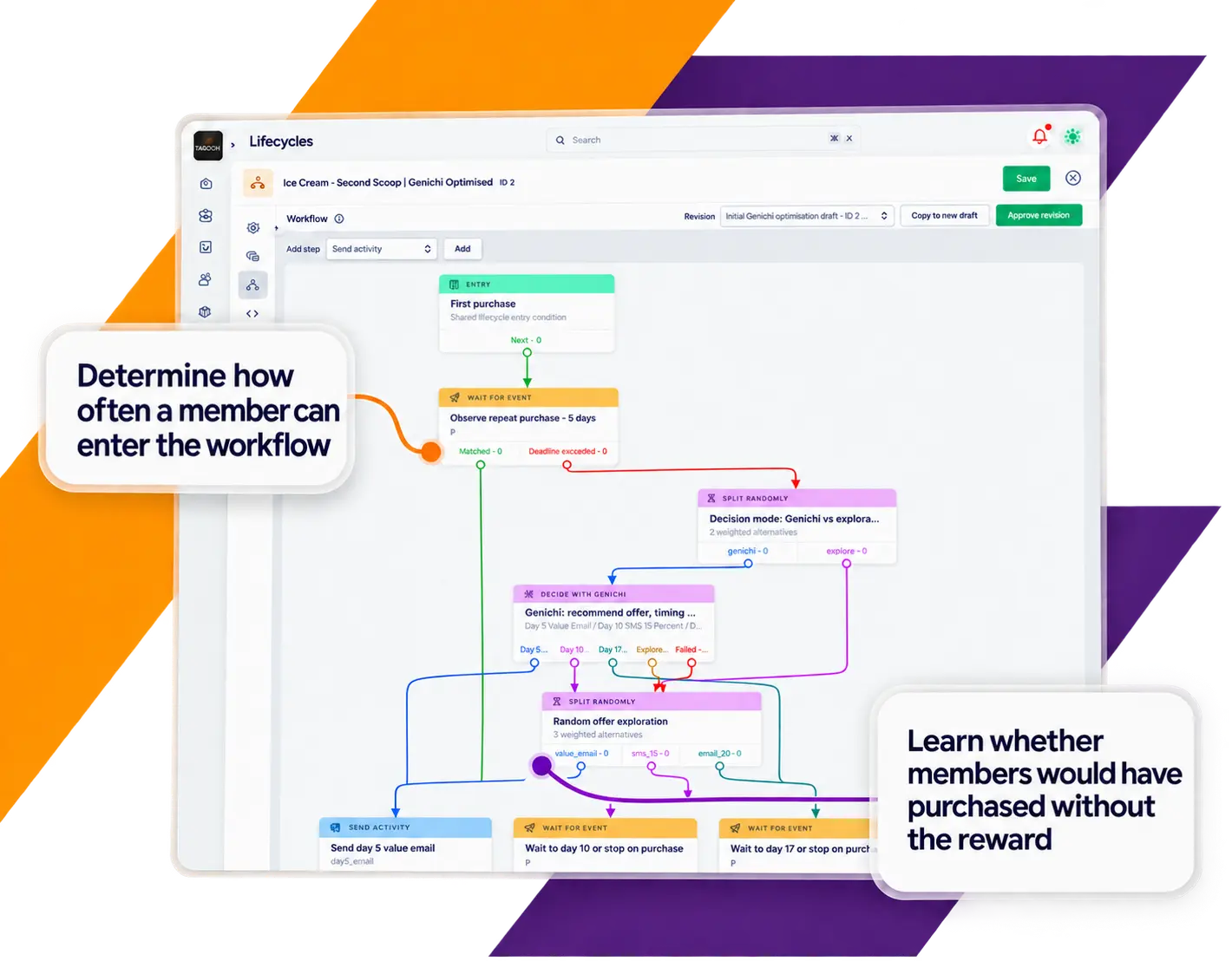
Taguchi’s next step is agentic lifecycle optimisation. Here, the assignment expands beyond a single campaign and covers the continuing work involved in improving a customer lifecycle.
A marketer might set the objective of reducing early-life customer churn. The agent could study where engagement begins to decline and recommend a different journey. It might adjust timing or propose another channel, with each change tied back to measurable performance.
People will define the operating boundaries and sign off on important decisions. Within those limits, agents can carry more of the ongoing analytical and optimisation work.
The lifecycle foundation being developed by Taguchi links measurable objectives to versioned journeys, with clear limits around the decisions an agent can make. A deployed journey version remains stable for customers already moving through it. That stability supports controlled comparison and provides a basis for future rollback.
Over time, marketers will be able to delegate more of the continuous work surrounding a lifecycle while retaining accountability for the customer experience.
More leverage, clear ownership
Adding a chat window to every screen will not transform marketing work on its own. The real gains come when an agent understands the environment, has access to trustworthy evidence and can carry an assignment through to a useful result.
People set the direction and make the judgement calls. Agents take on more of the work required to reach them.
Taguchi MCP and Genichi AI already support this way of working. Agentic lifecycle optimisation will extend it into a broader and more continuous form of delegation.
Success should be measured by the additional capability placed in the user’s hands: how effectively they can direct the work, learn from the evidence and improve the customer experience.
For practical product guidance, visit Taguchi Support, including guides to AI assistance in the Activity Editor and Genichi AI chat and MCP. To learn more about Taguchi’s approach to AI and marketing automation, visit the Taguchi AI and machine learning page.