Smarter sending: send-time segmentation, split testing and dynamic content
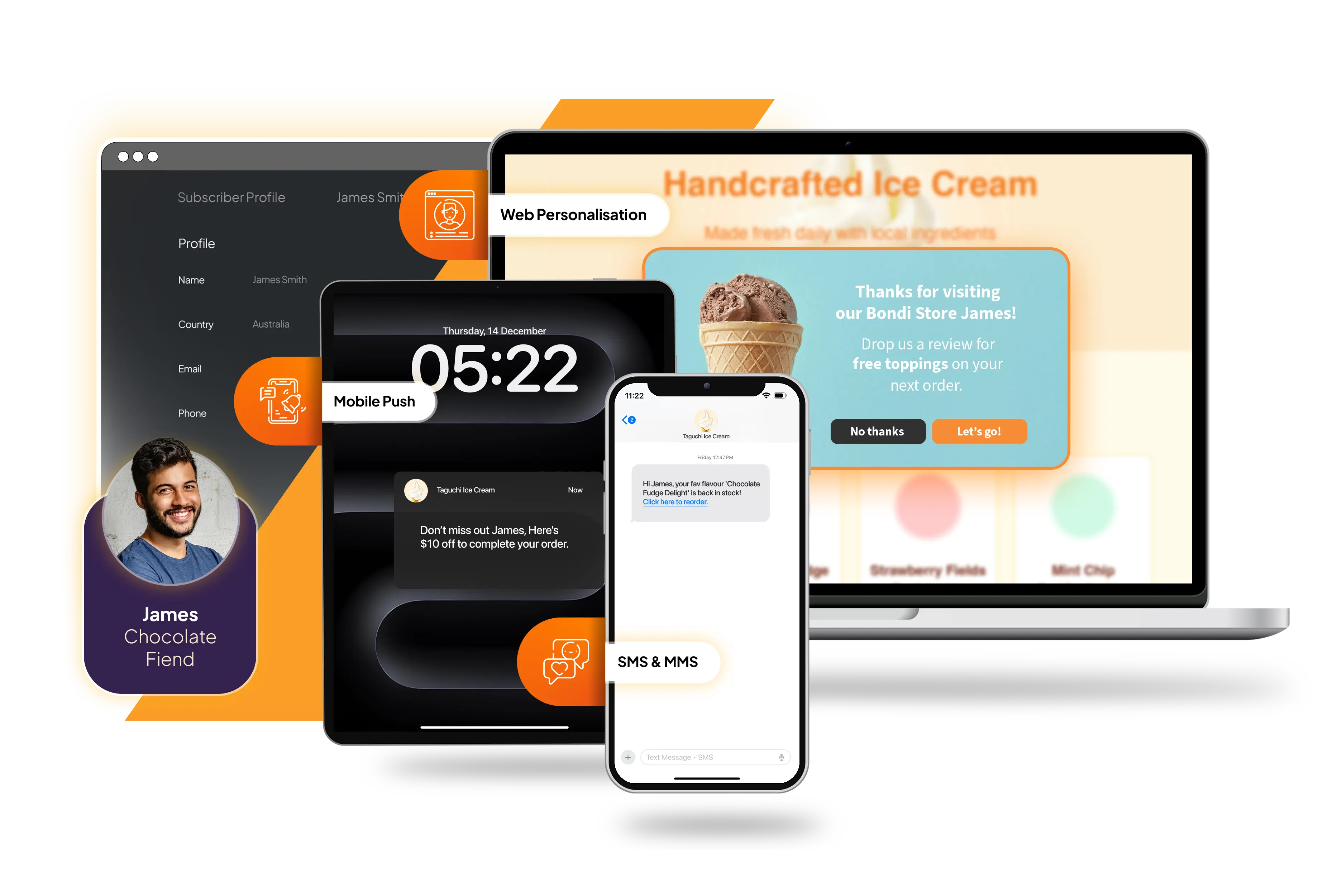
Personalisation is moving from “what should this customer see?” to a more demanding question: “what should they see, and when will it be most useful?” In 2025, customer context changes quickly and inboxes are crowded. A relevant message can become a late one within hours.
The industry has the ambition, but execution remains difficult. Adobe’s 2025 research finds that 82% of Australian and New Zealand brands say siloed online and offline data is hindering real-time personalisation. The challenge is turning useful signals into timely decisions without making campaign operations unmanageable.
Taguchi’s latest developments bring that decision-making closer to send time. New send-time segmentation and split options, previewable Dynamic Assets, coupon pairing and broader reporting give marketers more room to adapt—without giving up the controls needed to plan, approve and understand a campaign.
The right message also needs the right moment
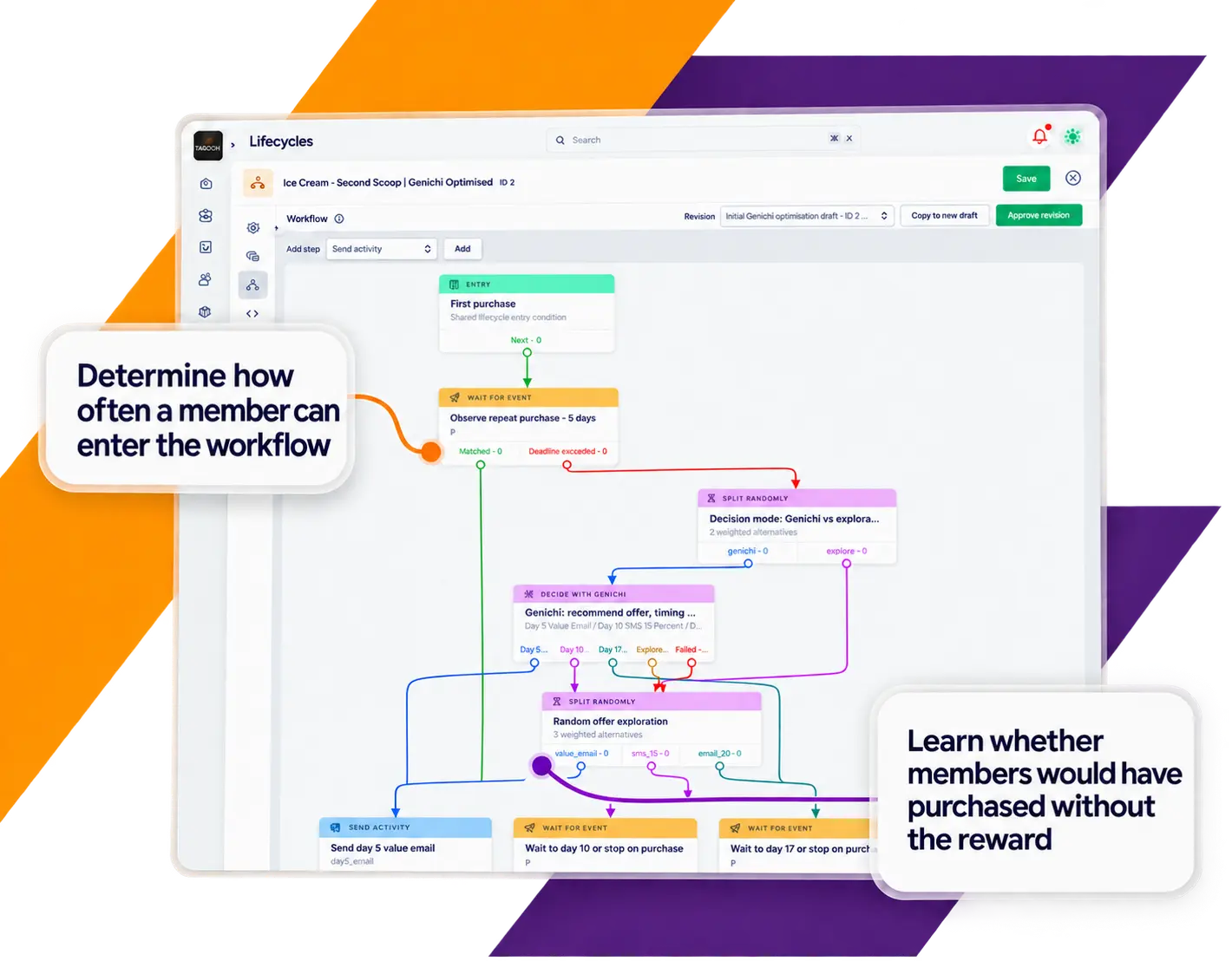
A single scheduled time does not always reflect the audience. Customers live in different time zones, follow different routines and respond at different points in the day. Creating an activity for every timing decision only produces duplicated content, fragmented approvals and reporting that must be pieced together later.
Taguchi’s send-time automation lets teams define several delivery times within one email activity and associate each with one or more content segments. Every time carries an explicit time zone, so “9am” can represent the intended local moment rather than a server-side assumption.
The workflow also makes exceptions deliberate. If a recipient matches no send-time option, the activity can use its scheduled start, wait until a defined time, or select an individually optimised time before a chosen deadline. If several times match, marketers can use the earliest, latest or a random eligible option.
These choices turn timing into part of the targeting strategy. A national campaign can respect local trading hours, a loyalty segment can receive an offer near its strongest response window and a time-sensitive message retains a clear fallback. One activity remains the source of truth.
Make testing part of the operating model
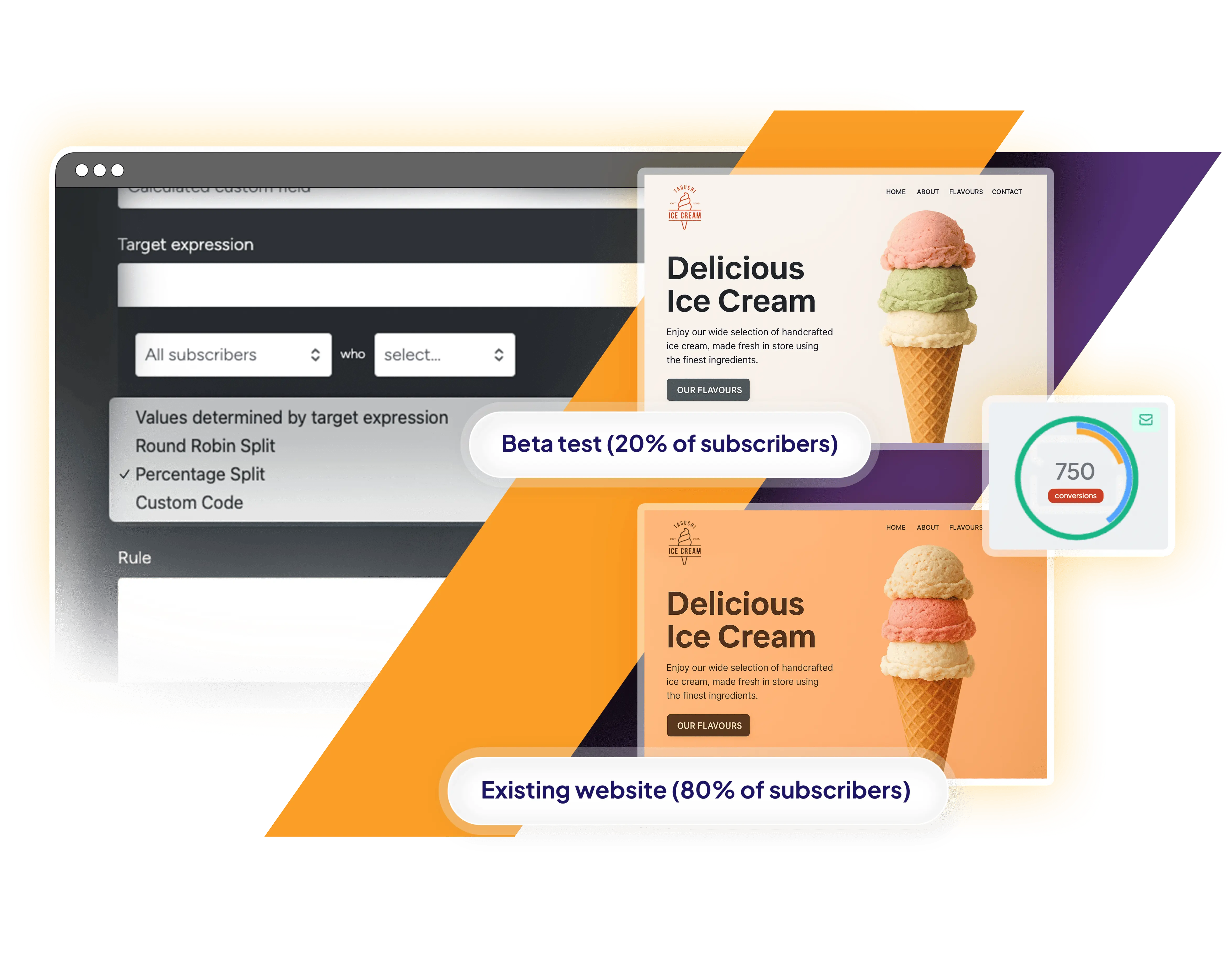
Random selection between eligible send times creates a practical timing test without manually preparing separate lists. The comparison is designed into the activity, making experimentation easier to repeat.
Percentage-based calculated fields provide another layer. Records can be assigned to values in a chosen proportion, creating groups for targeting. The rules now support a single 100% allocation as well as multiple percentage groups. A pilot can therefore move to one treatment without rebuilding the field or dependent targeting. The aim is a repeatable way to learn, then apply that learning with less friction.
See dynamic content before the customer does
Dynamic content is powerful because the final choice can reflect the recipient. It is also difficult to review when its logic sits behind a placeholder. Marketers need confidence in both the rule and the creative it may select.
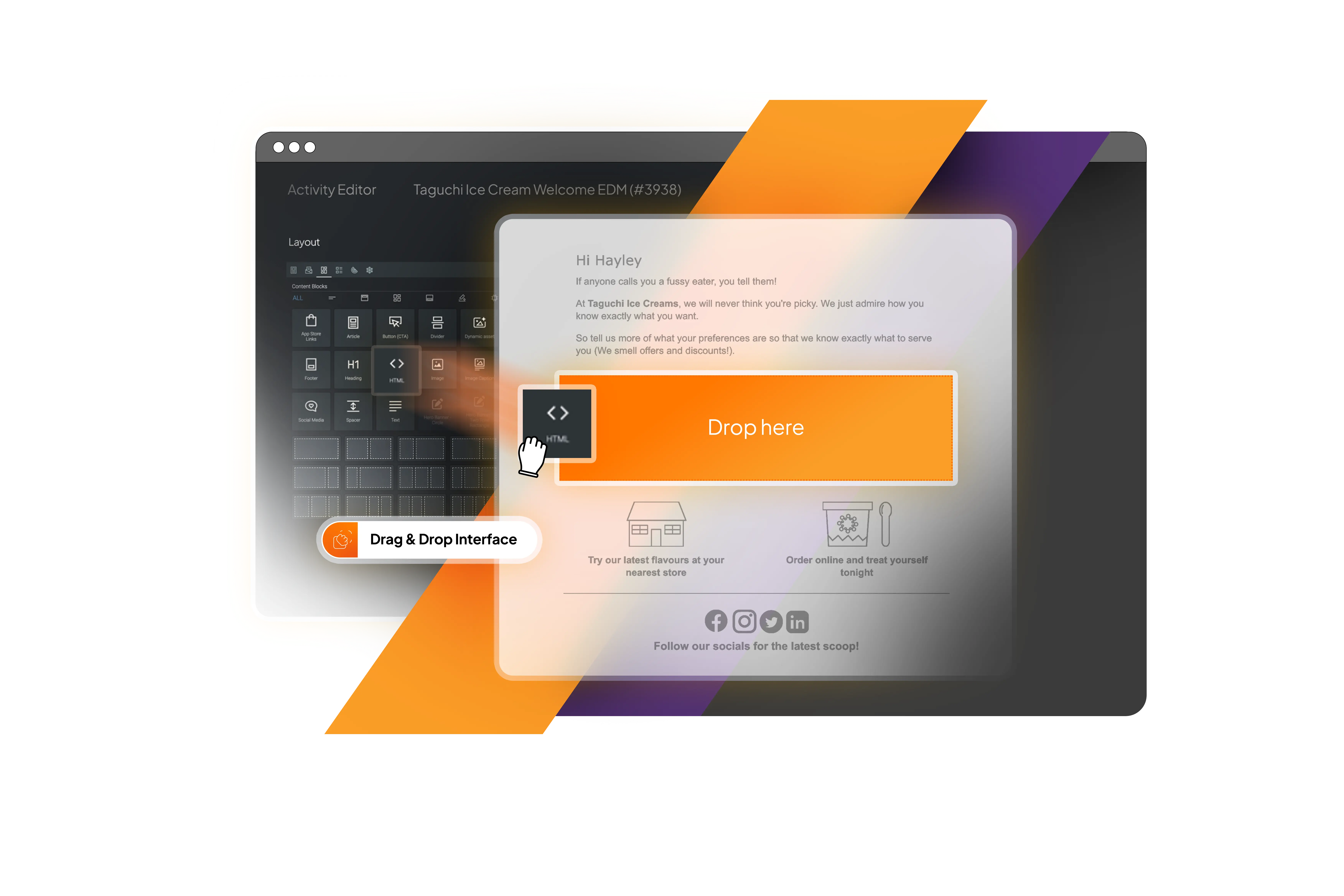
Dynamic Assets now close that visibility gap. After adding tags to a Dynamic Asset block, the editor shows the assets that may match, with their name, ID, tags, priority, publication window and target expression. Useful audience statistics—including targeted and contactable subscribers and an estimated open rate—provide further context for the selection.
A marketer can select a matching asset and preview it in the email canvas, then move through other eligible assets without leaving the activity. Teams can inspect the real content behind a rule and resolve an outdated image, conflicting offer or unexpected match before approval.
At delivery, tags, targeting, priority and publication dates work together to choose an appropriate asset for each recipient. A reusable campaign can therefore remain current as audiences and offers change, while content owners continue to manage the underlying assets centrally.
Keep the offer and its coupon together
Relevance breaks down when personalised creative and its offer are separate processes. A customer should not see a promotion that conflicts with the coupon they receive—or a code that is unavailable.
Coupon pairing now extends to Dynamic Assets. Teams can link a coupon type to an asset and use its code or associated fields in the content. When the asset is published, allocation follows the subscribers eligible under its target expression and stays aligned as that audience refreshes. Marketers can also decide whether existing recipients should receive a new coupon and how the campaign should behave if supply is insufficient.
This connects three decisions that belong together: who qualifies, which creative they see and which individual offer they can use. It reduces manual joins between audience, content and coupon data, while exposing inventory and allocation status before send.
Measure the programme, not just the send
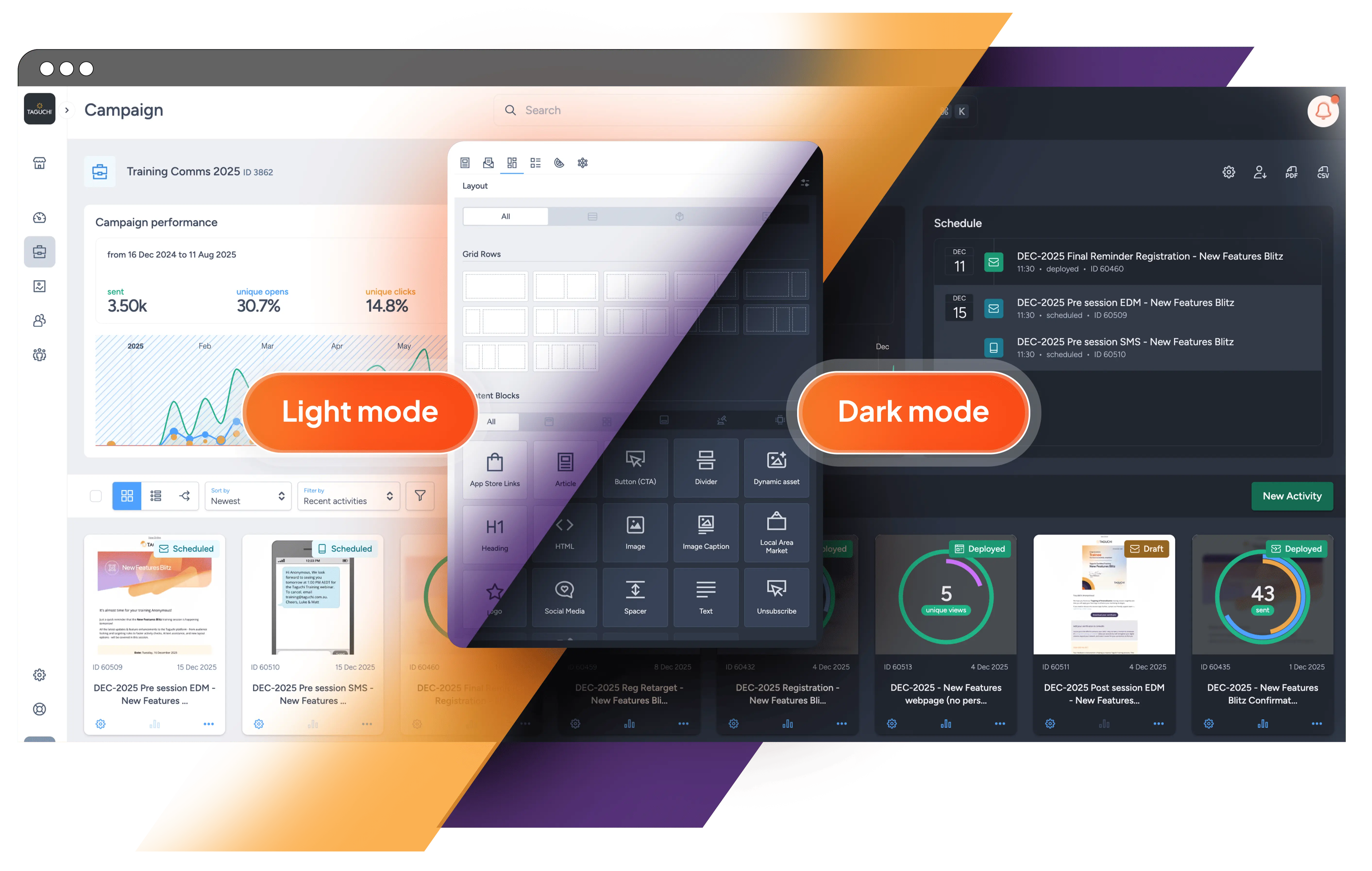
More flexible campaigns need reporting at more than one level. Users can now select multiple deployed activities from the Dashboard or a campaign—or select several campaigns—and generate one CSV summary. Results are grouped by channel and ordered chronologically for easier comparisons and stakeholder reporting.
Push notification performance also joins the reporting workflow, bringing channel activity into Taguchi’s online reporting and downloadable PDF and CSV formats. Dynamic click tracking adds flexibility for distributed brands: a Theme can resolve the tracking domain from recipient or partition data, with a fallback when needed. Links can carry the appropriate brand or local domain without requiring a separate campaign build for every business unit.
Together, these changes help measurement keep pace with execution across the campaigns and channels that make up the wider customer journey.
Smarter sending is controlled adaptability
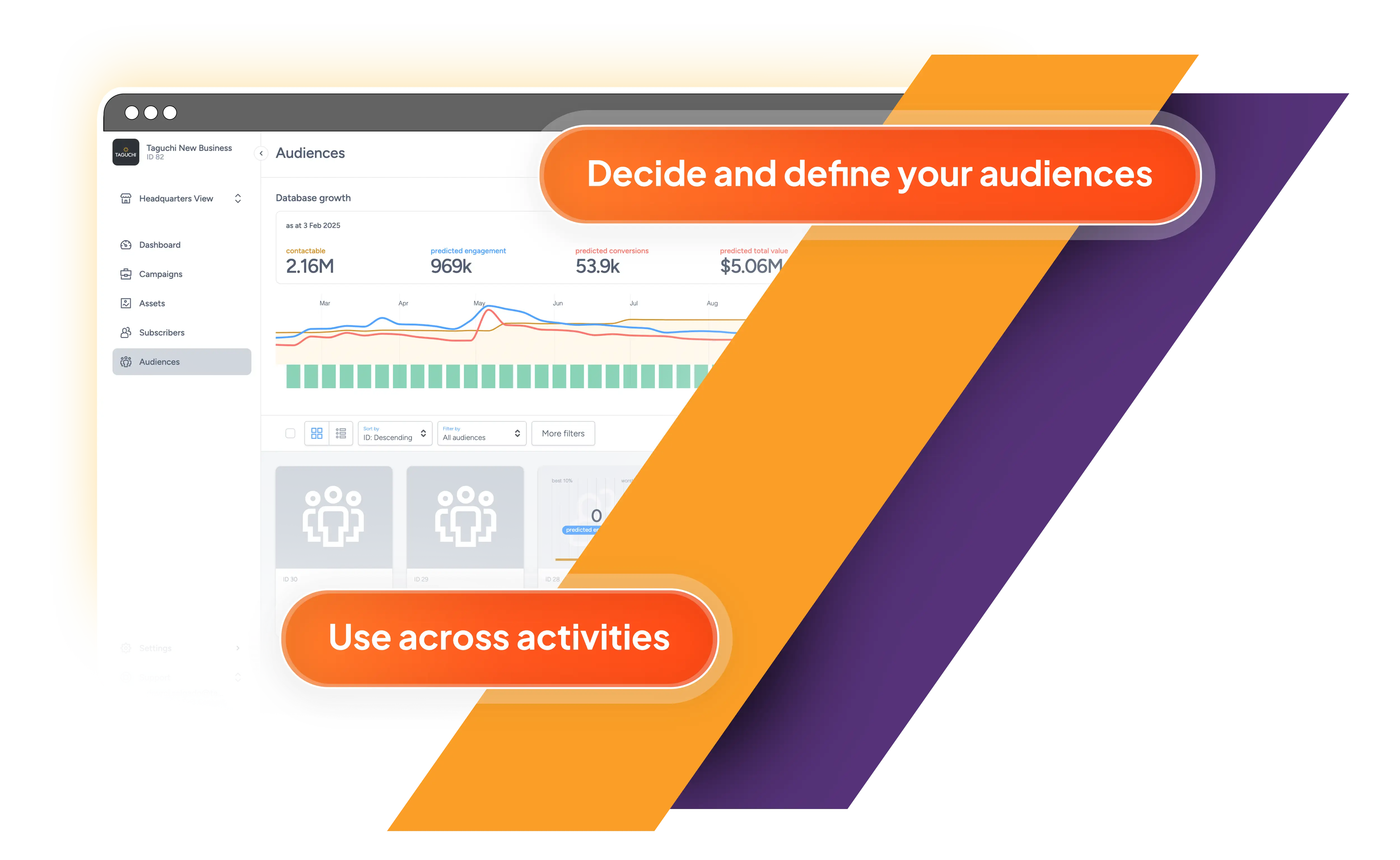
The goal is not to maximise variants. It is to make each useful decision at the latest responsible moment: define the audience and safeguards, let timing and content respond where they add value, preview likely outcomes and bring the results together for learning.
With send-time segmentation, more flexible splits and previewable Dynamic Assets, Taguchi helps marketers replace rigid batch thinking with controlled adaptability. The result is a campaign operation that can stay relevant for longer, learn faster and scale personalisation without multiplying manual work.
For practical guidance, explore Send Time Automation, the Asset Library, Coupons, Calculated custom field use cases and bulk reporting on Taguchi Support. To learn more about Taguchi’s customer engagement platform, visit the Taguchi website.